FeatureFEAT-2
Password self-serviceWhat are we building, and why?
A capability someone could demo or point at: the problem it solves and the value it brings.
e.g. Password self-service
Spexd holds your product’s features, requirements, designs and tasks on one line that your team and your coding agents build from.
It understands how they relate to each other, which ones a change will affect, and how each one maps to your actual codebase. That lets you and your agents understand your product, the decisions behind it and the constraints it has to meet.
What are we building, and why?
A capability someone could demo or point at: the problem it solves and the value it brings.
e.g. Password self-service
What must it do?
One thing the feature has to do, proven by acceptance criteria that say how you’ll know it’s done.
e.g. Reset links expire after one use
How will it work?
How the system meets a requirement: the architecture, data and flows behind it.
e.g. Single-use token validation
Who’s building which part?
A unit of work that delivers a design, linked to the branches and pull requests that ship it.
e.g. Offer a new link on rejection
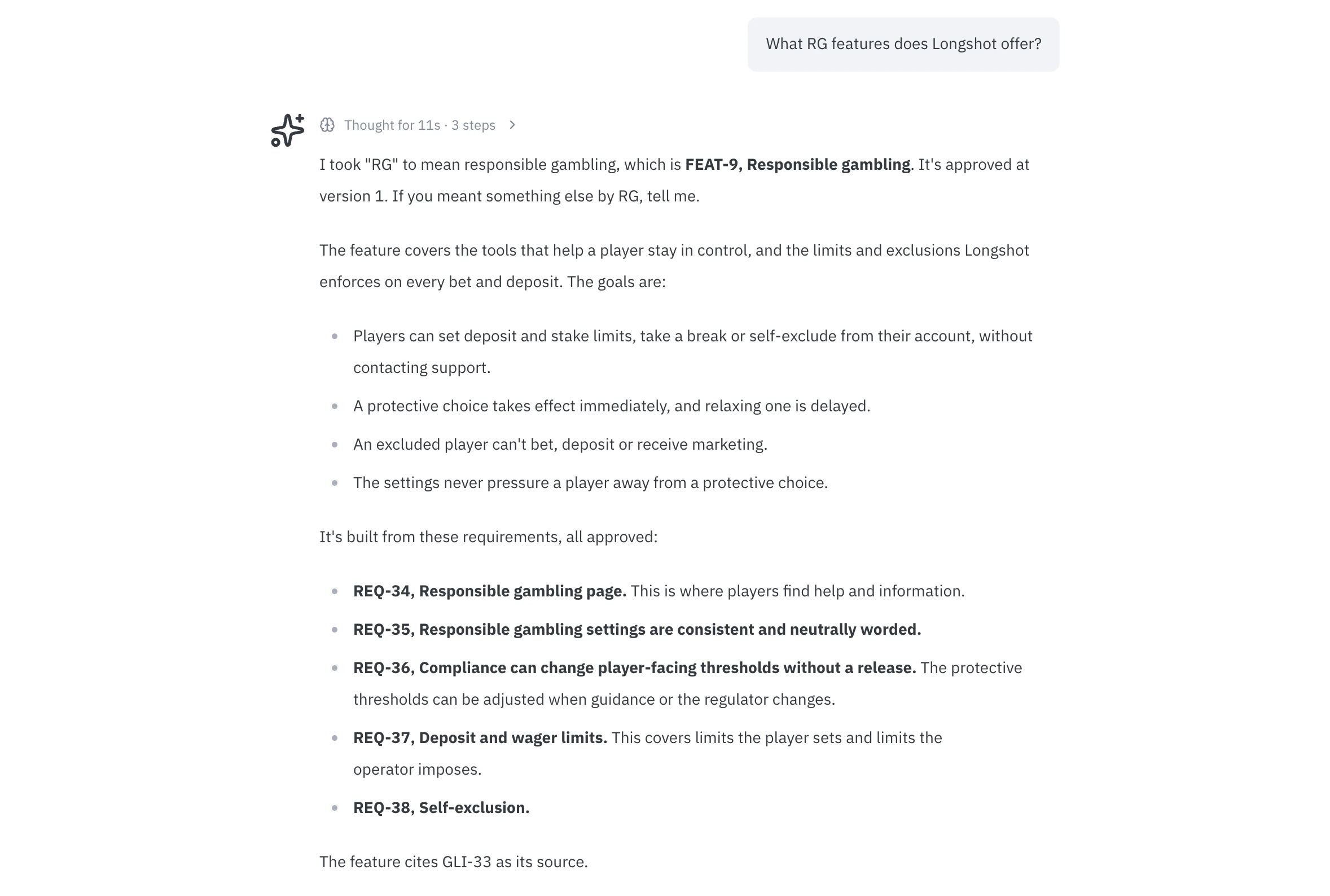
01 · Discover
Connect your repositories and bring your existing docs and tickets. Spexd discovers your features, requirements and designs from what is already there, because not everyone has the luxury of a greenfield product.
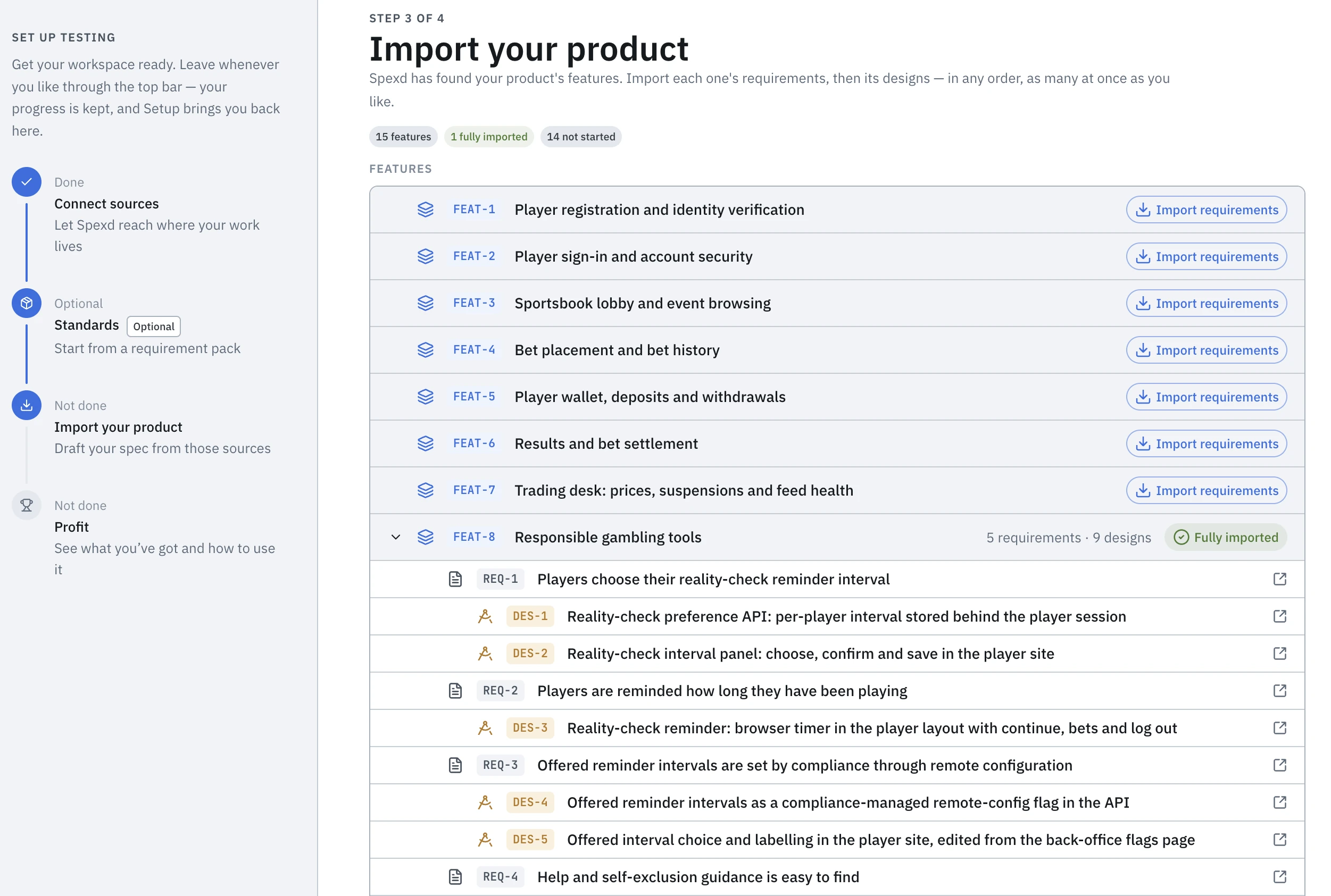
02 · Regulatory packs
Apply a requirement pack, such as GDPR or GLI-33, and its requirements land in your own specification, reused wherever you already cover them. Each criterion records where it came from, so anyone can see why a rule exists, how regulations are being met, and (hopefully not!) any gaps that exist.
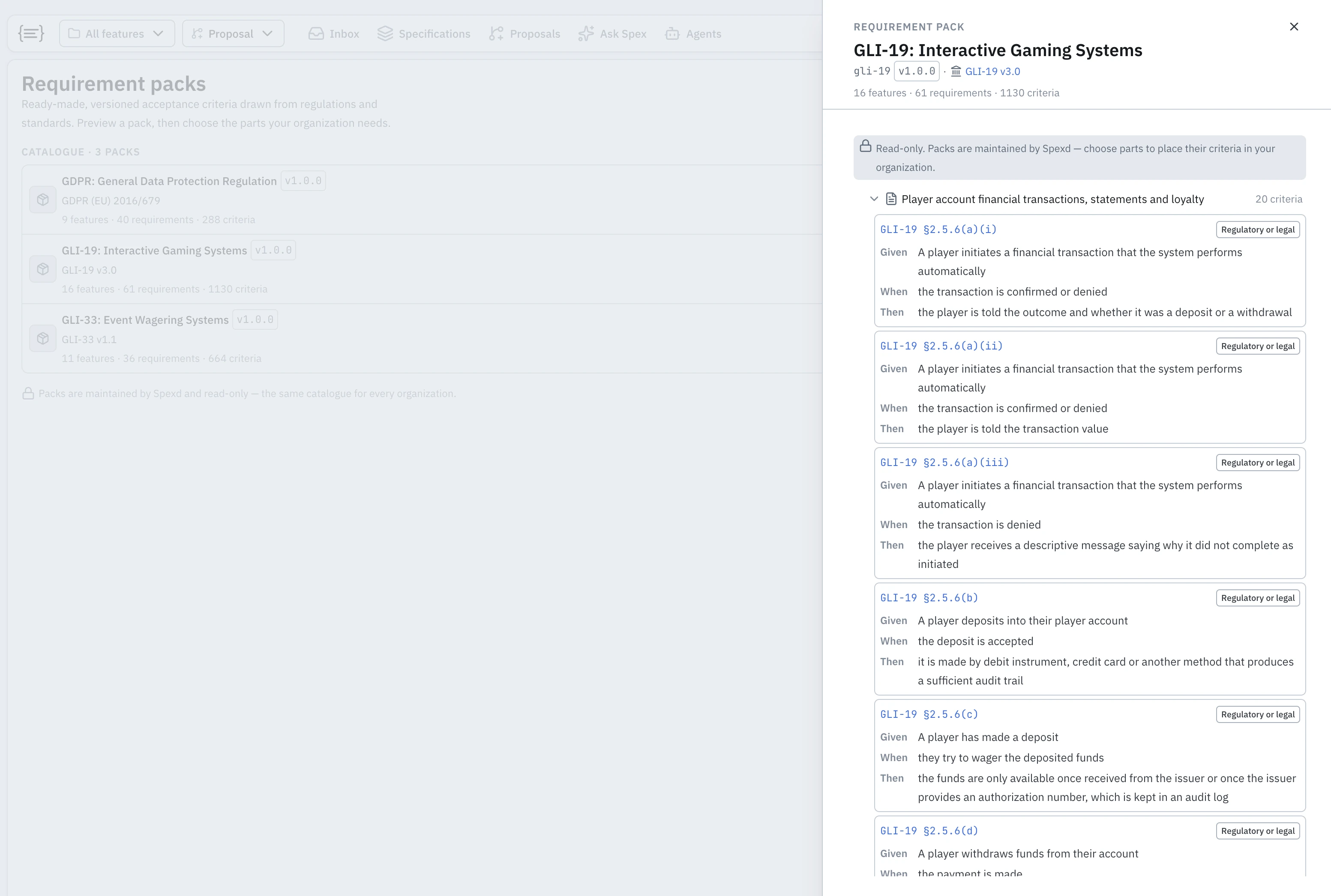
03 · Traceability tree
Each feature holds its requirements, the acceptance criteria that prove them, the designs that meet them and the tasks that build them. Anyone on your team can open a task, see why it exists and how it fits into the big picture. Coding agents get the same context before they start: not just the task, but the context, constraints and decisions it should work within.
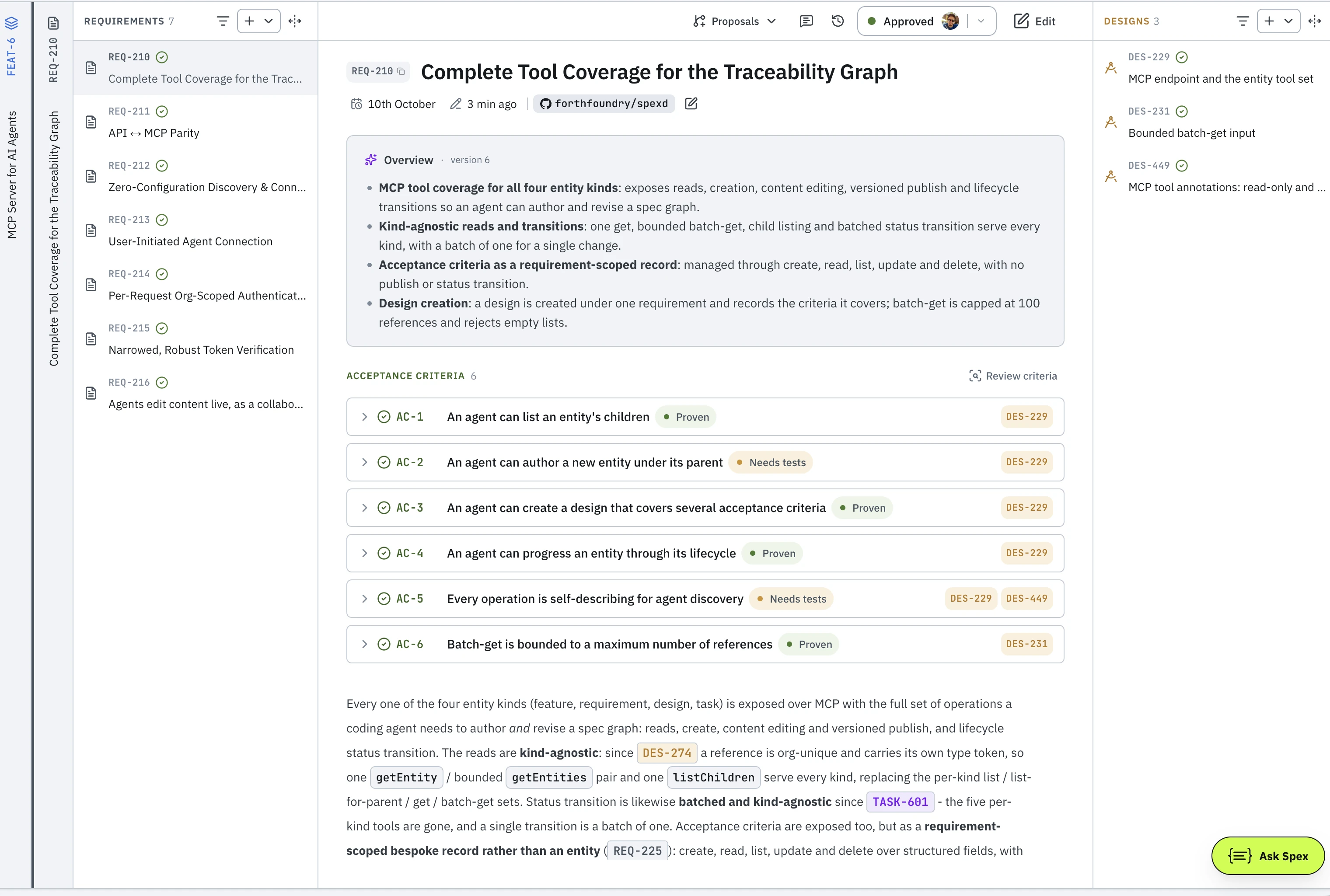
04 · Specs, for humans
Every spec in Spexd opens in a rich editor that anyone in your business can read and edit. AI first doesn’t mean sacrificing the human experience, or forcing everyone to work in Markdown. People and agents edit the same document together, and Spexd writes an overview of each spec so you can skim it before you dive in.
05 · Approvals & invalidation
Accountability through human approval: every approval records who agreed to which exact version. When a requirement changes, Spexd works out which approved designs and tasks the change actually reaches and sends those back for review with the reason, before anything is published.
06 · Relations
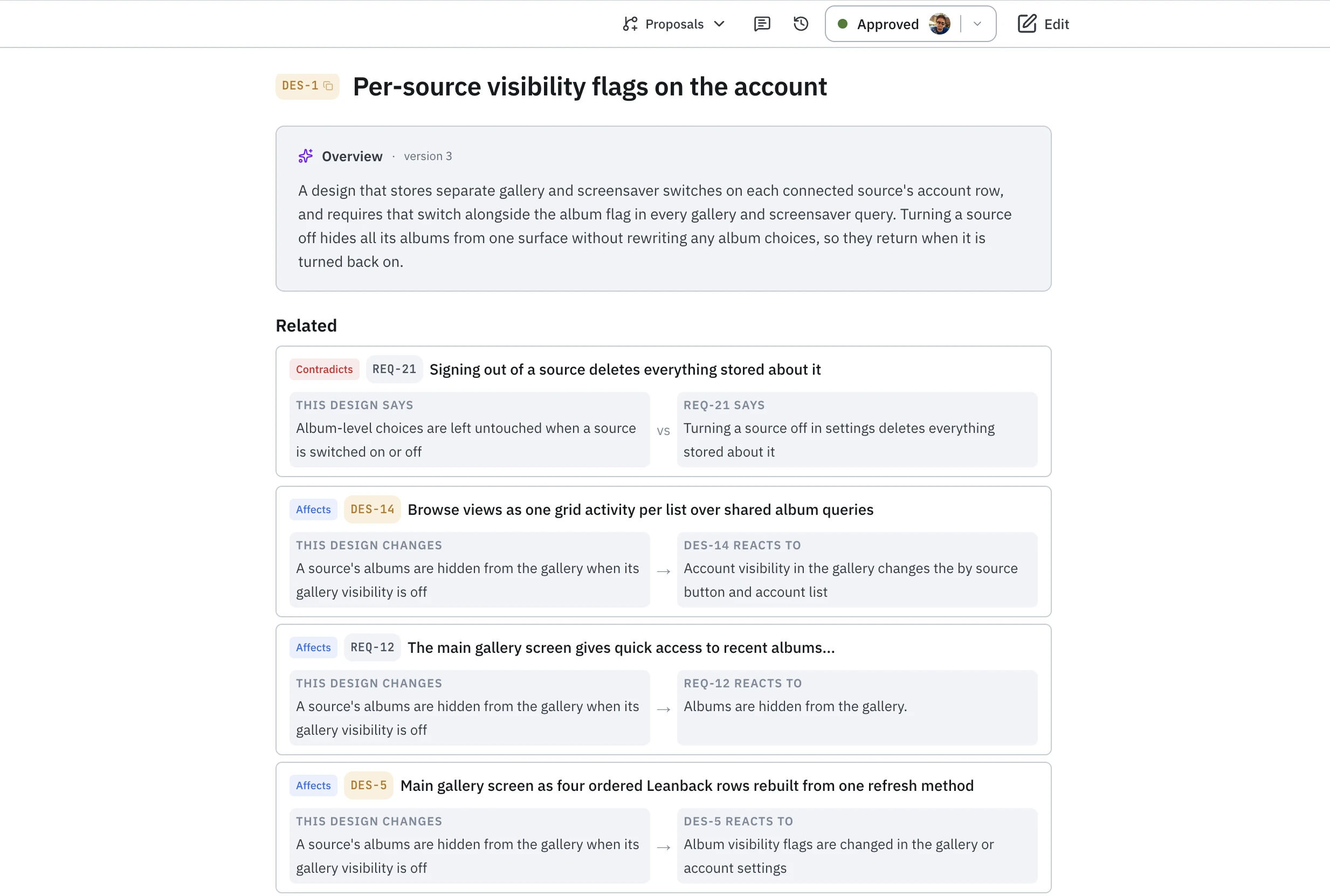
Spexd reads across your whole specification, not one project at a time. It finds requirements that contradict each other, work that overlaps, and changes in one place that another part of the product has to honour, and shows them to your team and your agents.
07 · Reviews
Before an approver sees a draft, Spexd flags any gaps. With GitHub connected, your specs are reviewed as your code changes, ensuring they always stay up-to-date and accurate. Similarly, pull requests are reviewed against your requirements, ensuring change is well informed and intentional. Every finding cites what it read, and a person decides what changes.
08 · Ask Spex
Ask Spex is the assistant built into Spexd. It answers from your current specs and your code. It can draft and update specs as well, and shows you every change before it is saved.